
Part 1: The Problem
Bridging the Gap: The $1.85 Trillion Imperative for Digital Transformation in Construction
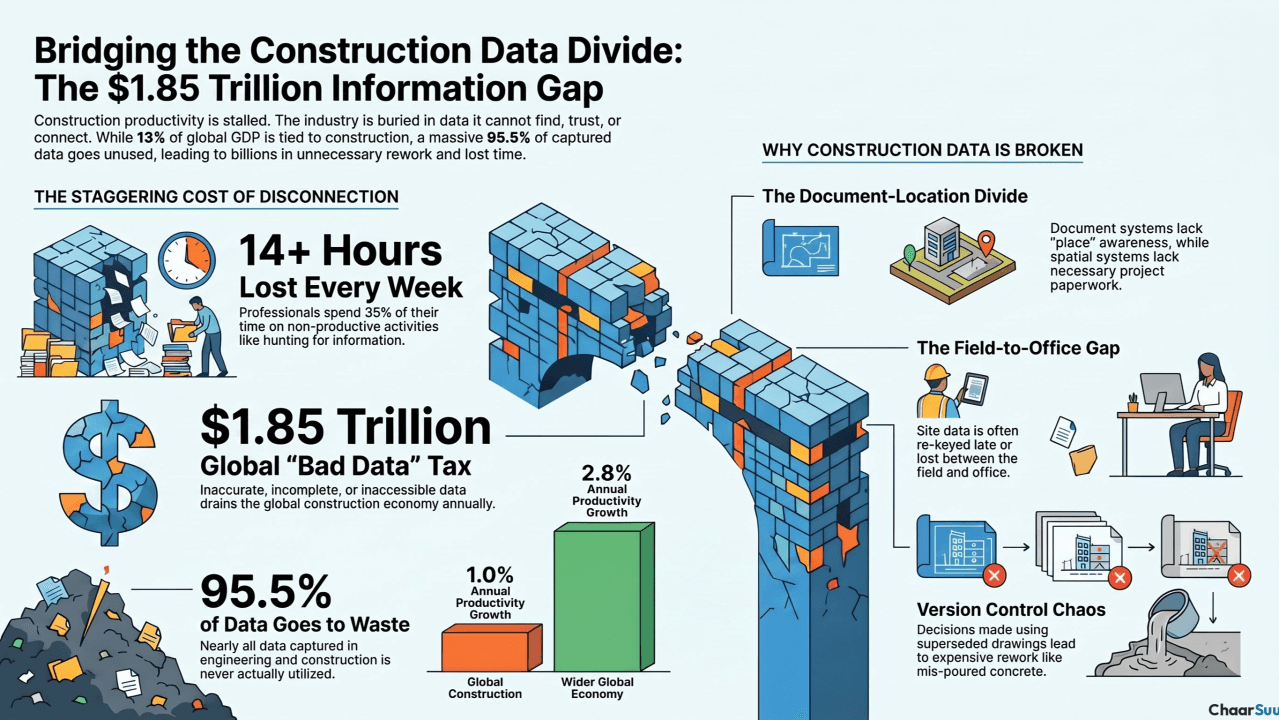
Construction is one of the largest industries on earth, at roughly 13% of global GDP, and one of the least improved. The McKinsey Global Institute found that labour productivity in construction has grown by about 1% a year over two decades, while the wider economy grew at 2.8%. If construction simply caught up, McKinsey estimates it would add around $1.6 trillion in value every year. That gap has persisted through booms and recessions. It is structural, not cyclical.
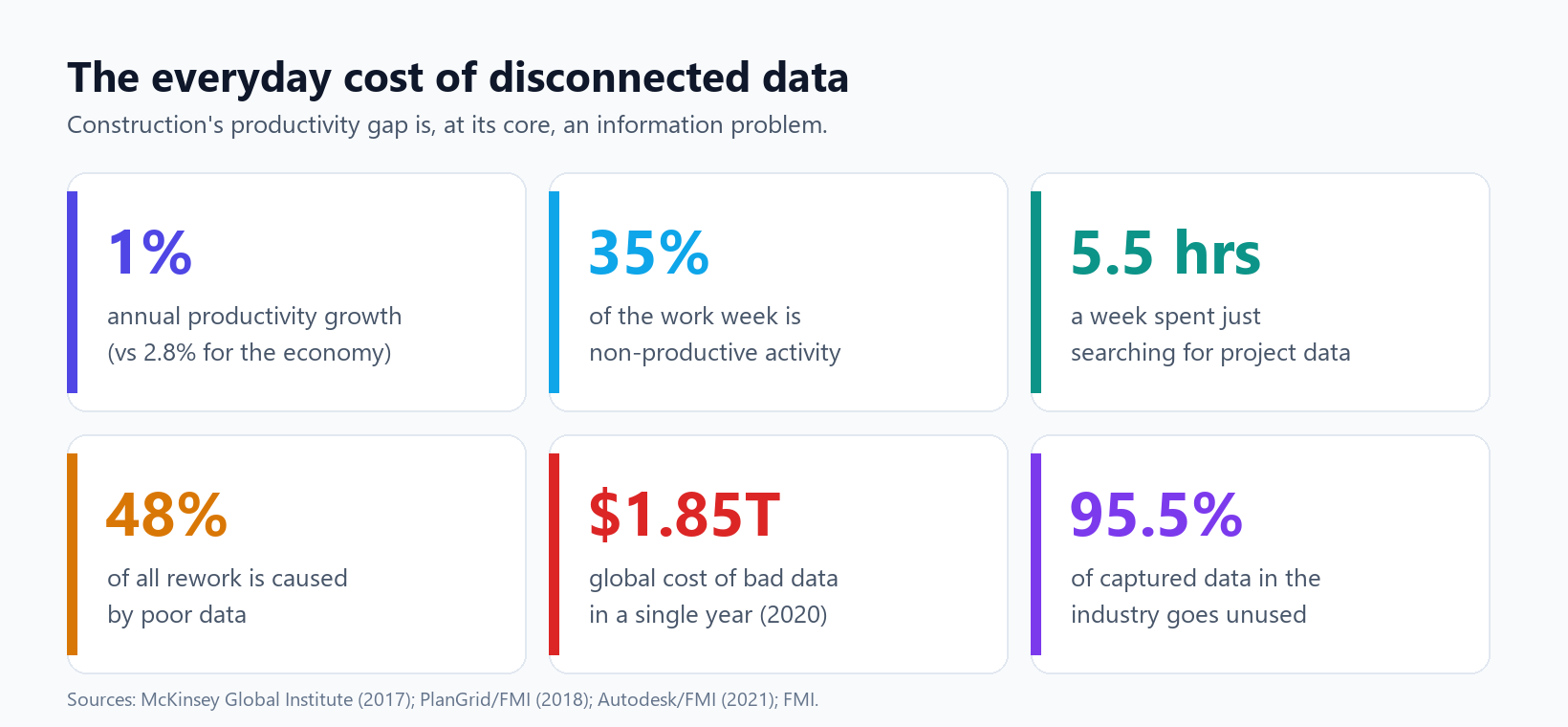
Figure 1. The everyday cost of fragmented construction data.
Sitting underneath that productivity stall is an information problem, and the numbers are sobering.
Construction professionals spend about 35% of their time, more than 14 hours a week, on non-productive activity. Of that, roughly 5.5 hours a week goes purely to hunting for project information (PlanGrid and FMI, Construction Disconnected, 2018). Poor data and miscommunication were found to drive 48% of all rework in US construction, an estimated $31.3 billion in a single year. A later study by Autodesk and FMI put the cost of "bad data," meaning data that is inaccurate, incomplete, inaccessible, inconsistent, or untimely, at $1.85 trillion globally in 2020, including $88.69 billion in rework alone. Perhaps the most telling figure of all: FMI estimates that 95.5% of the data captured in the engineering and construction industry never gets used.
The industry is not short of data. It is buried in data it cannot find, cannot trust, and cannot connect.
Several distinct problems compound this.
The first is fragmentation. A typical project runs across many disconnected systems: a document store for drawings and permits, a separate GIS or CAD environment for spatial data, a scheduling tool, spreadsheets, email, and messaging apps. Each holds a fragment of the truth, and none of them talks to the others. Stitching those fragments together is manual, repetitive, and error-prone.
The second is the divide between documents and location. Almost every record in construction relates to a place. A permit governs a parcel. An inspection happens at a structure. A sample is taken at a coordinate. Yet most document systems have no concept of place, and most spatial systems have no concept of the paperwork. The two halves describe the same reality but are managed separately, so connecting them is a recurring tax on every decision.
The third is version control. With files copied across drives and inboxes, teams routinely cannot tell which document is current. Decisions get made against superseded drawings. On a build, that means rework, and rework is poured concrete that has to come out.
The fourth is the field-to-office gap. Inspections, surveys, and progress are captured in the field, often on paper or phones, without a proper process in place to transfer the full picture, and sometimes in areas with no connectivity. That data is then re-keyed late, partially, or never. The link between what a crew saw on site and the asset record is weak or missing.
The fifth is compliance and lifecycle tracking. Regulators increasingly require operators to retain documentation for the full life of an asset and to prove compliance on demand. But obligations are rarely attached to the records they govern. Deadlines for permits, inspections, and commitments live in individuals' calendars and inboxes, so institutional memory walks out the door with staff turnover, and a missed renewal becomes a stop-work order or a fine.
The sixth is data portability. Different stakeholders, finance, planning, regulators, GIS teams, all need data in different formats. Producing each one cleanly is its own small project, and proprietary formats make leaving a system costly.
None of these problems is exotic. They are the everyday texture of construction and geospatial work. But together they explain why an industry awash in technology still loses days to searching, billions to rework, and most of its data to disuse. The challenge is not collecting more information. It is connecting the information already being collected, especially across the seam between documents and the places they describe.
These six problems are well documented, and none of them will be solved by a single tool. But they can be narrowed, particularly in industries where documents and locations are inseparable. In the articles that follow, we will look at how we are approaching some of these problems at ChaarSuu, starting with the seam this piece keeps returning to: the gap between project records and the places they describe.
Sources: McKinsey Global Institute (2017); PlanGrid and FMI, Construction Disconnected (2018); Autodesk and FMI, Harnessing the Data Advantage in Construction (2021); FMI.
Written by ChaarSuu
Read on LinkedInLiving some of these problems?
We build closely with a small group of construction and infrastructure teams. If this sounds like your work, we'd like to talk.
More insights
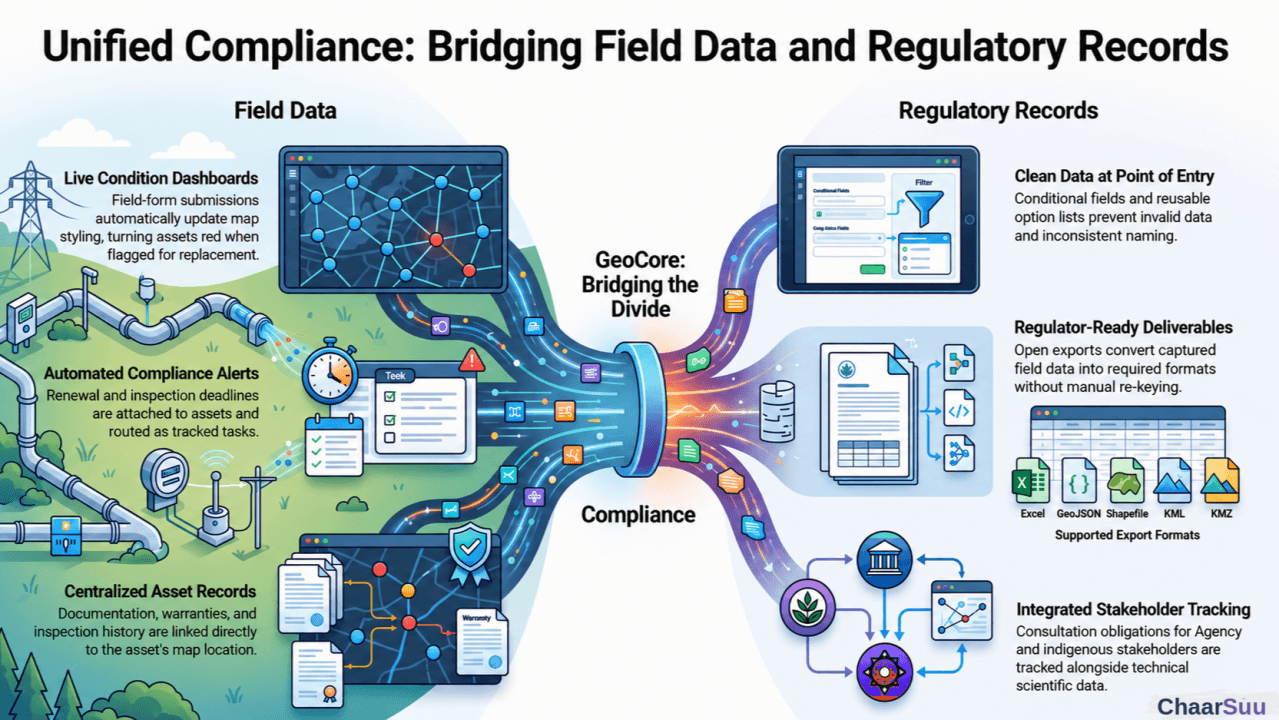
Utilities & Environmental Services in Practice
The third article in the series shows how utilities and environmental firms keep field data, documents, and deadlines tied to exact locations, so the data captured in the field is the same data used to prove compliance.
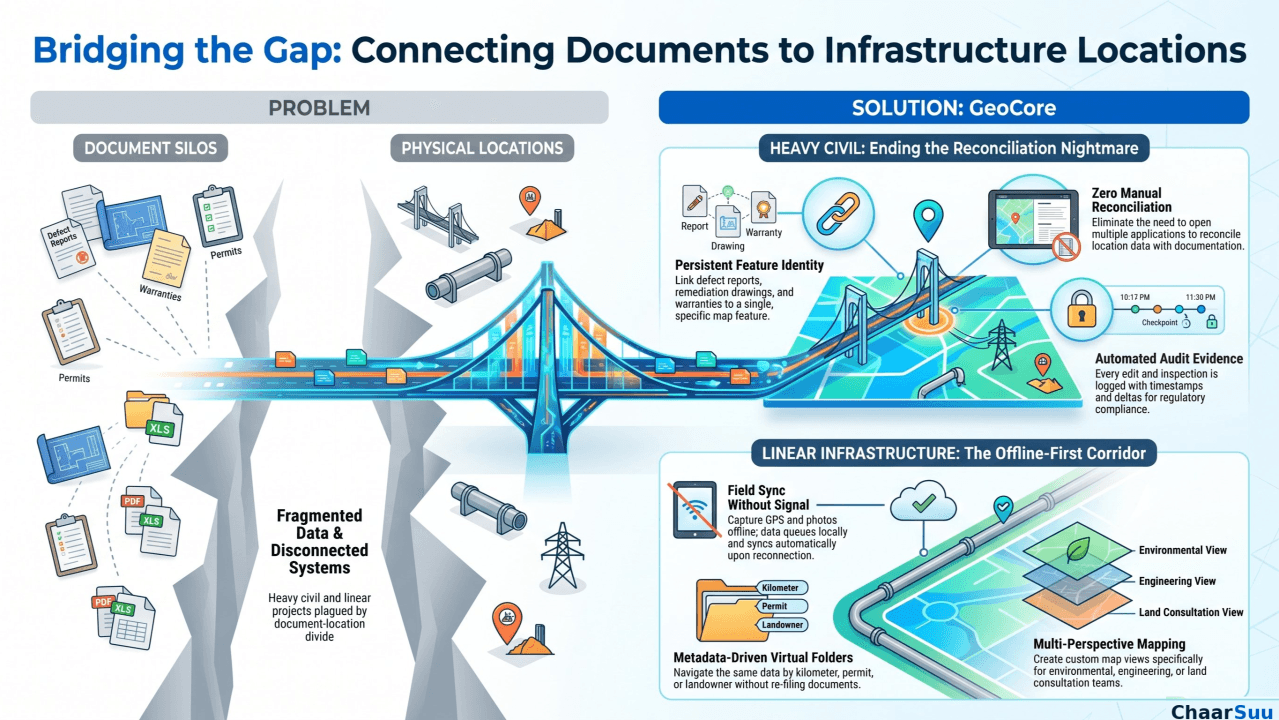
Civil Engineering & Linear Infrastructure in Practice
The second article in the series shows how the data problems from Part 1 play out on roads, bridges, pipelines, and rail, and how geoCore makes the map the backbone.